Organism of the week #30 – Sticky situation
All science is either physics or stamp-collecting.
This rather mean-spirited dismissal of chemistry and biology as “stamp-collecting” is attributed to Ernest Rutherford, the physicist usually (not wholly fairly) credited with discovering the atomic nucleus and the proton.
Shortly after Rutherford’s death in 1937, particle physicists discovered the muon, pi mesons, kaons, the electron neutrino, the anti-proton, the lambda baryon, xi cascades, and sigma baryons. It took physicists the thirty years following Rutherford’s death to make sense of this veritable album of subatomic stamps.
Beautiful butterworts
A recent hike in Königssee to see Germany’s highest waterfall was a little underwhelming but the hydrological shortcomings were entirely forgotten when I spotted this beauty growing in a crevice above the lake:
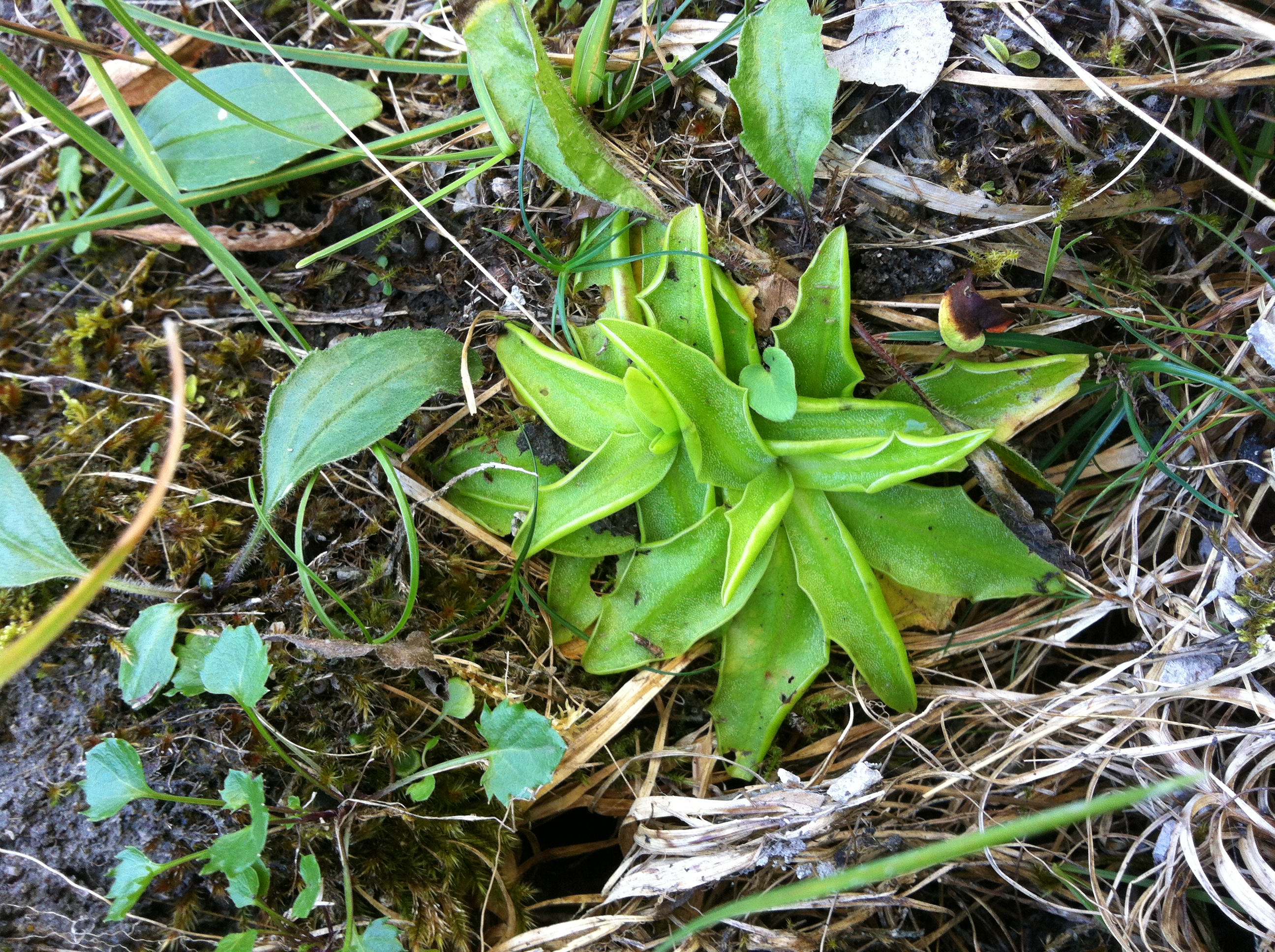
Butterworts are amongst my favourite carnivorous plants: their murderous ways are so delicately concealed. Who would suspect such a pretty bank of flowers to be a veritable morgue of fungus gnats?