Obfuscated pancakes
Anything is better than an recipe that uses volume measurements for highly compressible powders. I’m looking at you America, and your ridiculous ‘cup’ nonsense.
####### Materials
- 0.110 kg powdered wheat endosperm (without added carbonates or tartrates)
- 4.28 mmol NaCl
- 2 unfertilised jungle-fowl eggs (between 63 and 73 g in mass)
- 275 mL of 75% (v/v) aqueous diluent of cow’s milk
- 45.0 cm3 cow’s milk butter
- 1 hesperidium from a lemon-tree, cut into ungulae with semidisc dihedrals of π/2
- 55.8 mmol granular α-D-glucopyranosyl-(1→2)-β-D-fructofuranoside (particle size c. 350 microns)
####### Method
Illuminating error
Yesterday’s first-year biology practical involved forcing the laboratory work-horse bacterium Escherichia coli to take up a circular piece of DNA called pGLO.
pGLO contains a few genes, but the most interesting of these DNA sequences encodes a protein from a jellyfish. This protein fluoresces green under UV light, and goes by the thoroughly unimaginative name of green fluorescent protein (GFP). The production of the GFP is regulated by a second DNA sequence, this time taken from a bacterium. The normal job of this regulatory DNA sequence is to switch on and off the production of enzymes that degrade an uncommon sugar called arabinose. Since bacteria don’t often encounter arabinose, the enzymes are not produced unless there is actually some arabinose around to eat. This save resources.
Organism of the week #5 - Something's wrong here
Busy teaching this week, so it’ll have to be a quick one…

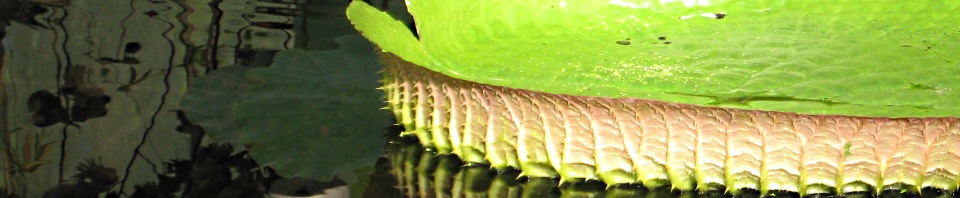
I particularly like this plant because of a very specific and unusual thing about its leaves. The more observant of you may spot what it is without having to resort to Wikipedia…
Organism of the week #4 - Toadstools
Imperial’s campus in Berkshire, Silwood Park, is a fabulous place to go fungus spotting. The fly agaric (Amanita muscaria) is very common there as there are a lot of birch trees around, and this fungus forms a symbiosis with the roots of those trees:
 Fly agarics are rather poisonous (for some value of ‘rather’), by virtue of containing muscimol, and ibotenic acid; the former is a psychoactive dissociative that can cause visual and auditory hallucinations. There is an enormous amount of folklore (i.e. lies) associated with this mushroom that I shan’t bother repeating. There’s not even much evidence that it’s any use for killing flies.
Organism of the week #3 - Switch off all electrical items on the approach
There are many good reasons to visit San Francisco, some of them thoroughly unsafe for work, but one I didn’t consider was to see this amazing sight on the approach to the airport:

The pink colour in the water is caused by a bloom of single-celled organisms I must refrain from calling bacteria, since they are not. Nor are they eukaryotes, the group to which you and I, and plants and fungi and protists belong. The things living in the water are halo’bacteria’, named before it was realised we needed a whole new classificatory scheme to accommodate their weirdness. Halobacterium is a member of the Archaea, which includes many extremophiles. Some are capable of living in near-boiling water, hot acid, or - as here - in very salty water indeed, but some are much more commonplace and allow some humans to set light to their farts.
More butterworts
After the trip to Königssee, I was inspired to retail therapy and bought myself as many butterworts as Hampshire Carnivorous Plants could supply:

They did me proud over this summer, with two of them flowering despite the root disturbance (on which butterworts are not keen), the chunky cultivar ‘Tina’:


Farewell Marlowe
Marlowe, the cellar spider who has been living behind my beside cabinet for the last 18 months, disappeared a few weeks ago, but I wasn’t too worried as they’d done that before and then turned up again a few weeks later, fatter and of greater span.
On Monday, however, Alex found Marlowe’s mortal remains beneath the bathroom radiator. Marlowe is no more.
Organism of the week #2 - Now wash your hands
I have delusions of being a competent recogniser of things that turn up in UK gardens, but when this started growing in what had previously been a pot of basil in the garden, I was clueless:

It looked a little like moss from a distance, but the bibbly bobblies were most certainly not moss-like close-up, and the whole thing had a rather unpleasant squeaky texture. Touching it left brownish-green stains on my fingers. Definitely not a moss.
Organism of the week #1 - Chimaera
I’ve been neglecting the blog of late, for reasons too dreary to explain. So I am taking the astonishingly original step of racking up a load of pretty pictures of organisms to release on a semi-regular basis. I am creativity incarnate.
Today, +Laburnocytisus ‘Adamii’.

Technically, this is a bit of a cheat for an organism of the week, as this organism is technically two organisms, one growing inside of the other.