Lacklustre butterworts
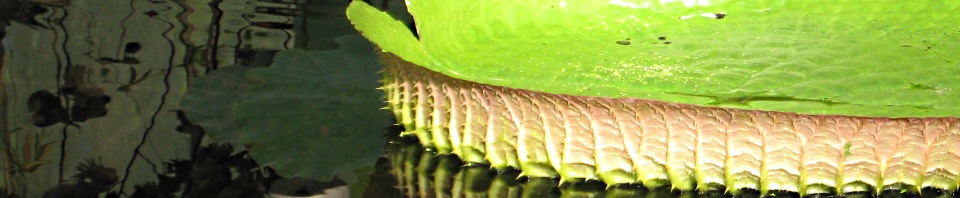
I’d like to be more excited about this than I am, but Pinguicula agnata is not the most crowd-pleasing of my butterworts, even whilst in flower (as it currently is). Ho hum. Strange specific epithet though. No idea why Casper (whoever s/he might have been) thought it appropriate. Could be worse though, I guess.
Metabolic pathways don't really have end products
The end product of glycolysis is pyruvate
This, and equivalent statements about other metabolic pathways:
The products of Krebs cycle are ATP/GTP, NADH and carbon dioxide
are not exactly wrong, but they are easily over-interpreted in a way that leads to misunderstanding. They are also easily swallowed as explanations without considering quite what ’end product’ is supposed to mean.
Glycolysis is the metabolic pathway in cells that converts glucose to pyruvate
Organism of the week #12 - Preying mantis
This is mostly just to see if I can get embedded video to work. Mantis religiosa…
Om nomnomnom.
Explain again why I need to install a plug-in to get WordPress to embed video from its own local media library?
Down amongst the butterworts
I lived within 30 minutes’ drive of Charles Darwin’s house for the whole of my childhood. It’s been open to the public since it was acquired by English Heritage in 1998. I’ve been a biologist of sorts for about 18 years.
It’s taken me until today to actually visit Down House, and to wander down the famous sandwalk behind the house, where Darwin used to do his thinking. I am a very bad, and very lazy boy. Also a very lucky one to have a husband prepared to schlepp to yet another greenhouse.
Moose objects and roles
Mr Moose’s Newfangled Object Framework
Creating objects from scratch by hand-rolling them is somewhat fragile, and you end up drowning in the writing of endless boilerplate accessor methods. I would strongly suggest that rather than doing objects the hard way, you use the Moose object framework unless there’s some particular constraint (speed, memory footprint) on your code that would make it inappropriate.
The kraken wakes
My butterworts have been waiting with unbated breath for the long, slow arrival of the spring. In winter, they cut their losses and produce small non-carnivorous leaves as there’s not enough prey around to justify investment in glue. In spring, they awaken and start making larger, insecticidal leaves again. Tina has already captured a fungus gnat with one of her freshly unfurled leaves.
Enzymes don't necessarily increase the rate at which products are formed
An enzyme increases the rate of product formation
What happens if you add the enzyme malate dehydrogenase to a mixture of of its substrates NAD and malate (both at 1 mM for the sake of argument)?
A brief look on BRENDA indicates that the reaction malate dehydrogenase catalyses is:
malate + NAD → oxaloacetate + NADH
So you might very well expect that the NAD would oxidise the malate, and the products oxaloacetate and NADH would rapidly accumulate.
The product of succinate dehydrogenase is ubiquinol not reduced flavin
Succinate dehydrogenase (SDH) produces reduced flavin (FADH2) as a product
This misconception is so widespread, even the exam boards get it wrong. Page 41 of the Edexcel GCE specification for A-level biology (2008 onwards) states that students should be able to…
Describe the role of the Krebs cycle in the complete oxidation of glucose and formation of carbon dioxide (CO2), ATP, reduced NAD and reduced FAD (names of other compounds are not required) and that respiration is a many-stepped process with each step controlled and catalysed by a specific intracellular enzyme. [my emphasis]
Misconceptions in life sciences
Last month, I was involved in teaching on a life science communication course, some of the results of which you can see on Wikipedia. One of our guest speakers was Alom Shaha, who demonstrated the misconceptions students have about e.g. the forces acting on a ball in flight:

A typical response demonstrates some common misconceptions, particularly about Newton’s First Law of Motion:
Organism of the week #11 - Not even primitive
It’s not much to look at, but Psilotum nudum‘s naked fronds* *hold a cautionary tale for biologists:
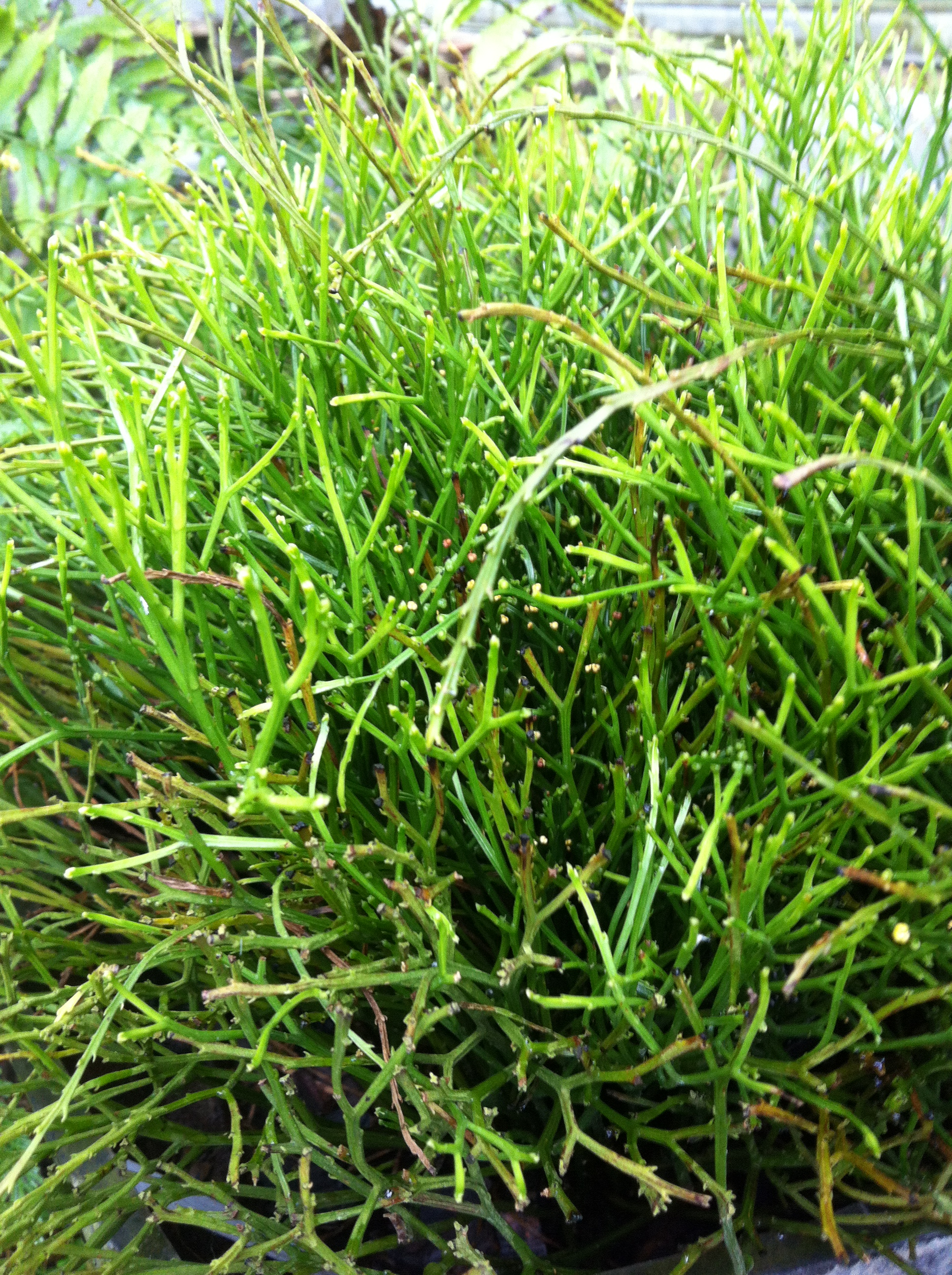
Psilotum looks a great deal like some of the earliest fossils of land plants. One of the earliest such fossils is Rhynia, the first specimens of which which were unearthed in Aberdeenshire around 1910, a mere 410 million years after they were originally buried.