The Wason card problem
The Wason card problem is a well-known psychological test that probes how people think about hypothesis testing. The version I use in one of my first-year lectures is shown below. I think the original version used letters and numbers, but I’m a biologist, so obviously I use pictures of dead pets instead of numbers.
- We know that each of the four cards shown below has a letter on one side and an animal on the other.
- We suspect that if there is a vowel on one side of a card, then there is a mammal on the other. Which card(s) do we need to turn over to determine whether this hypothesis is false?
It’s well worth doing this for real yourself before reading any further:
Organism of the week #17 – Daughter of Ungoliant
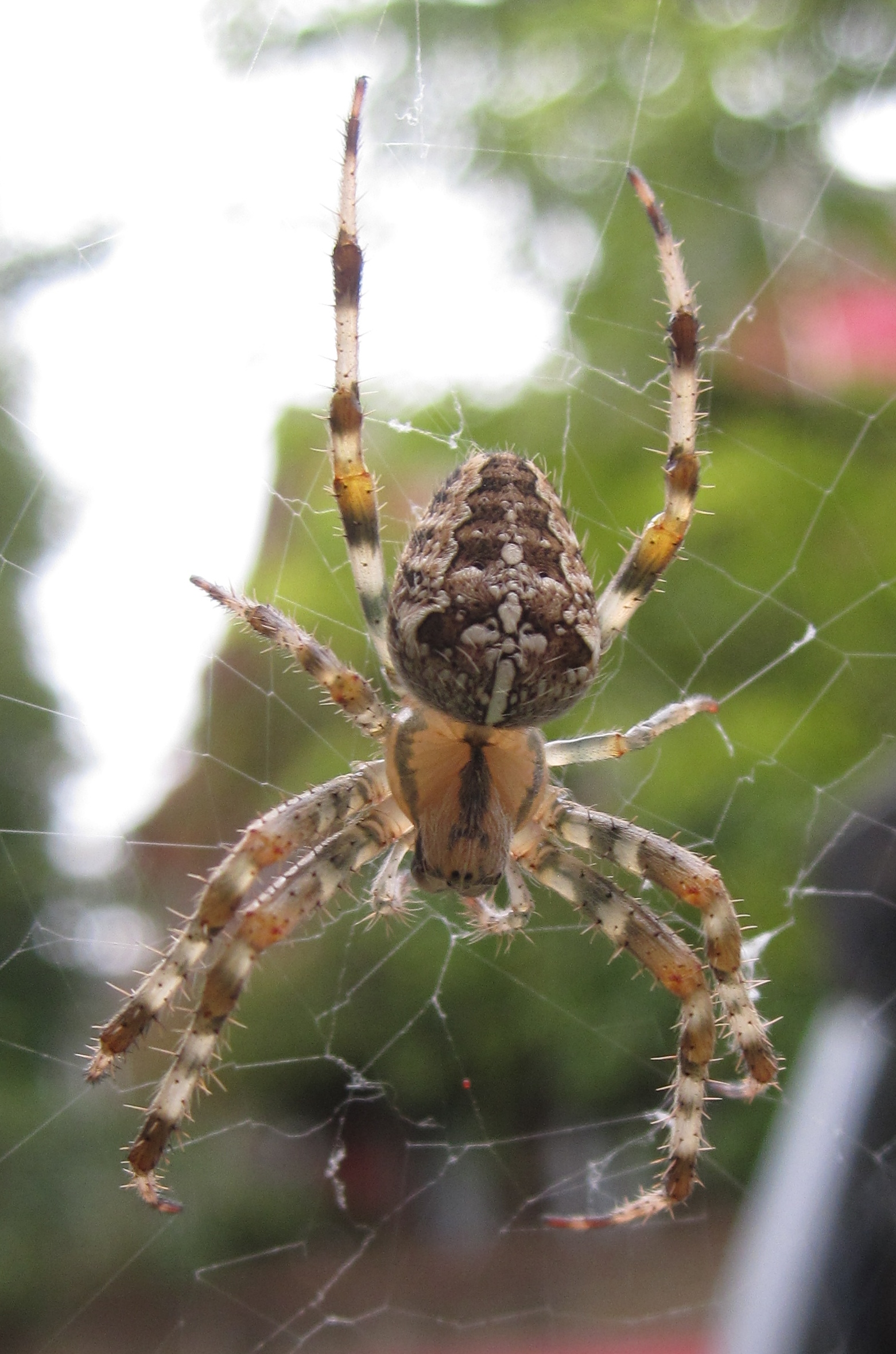
I’d never noticed that a garden spider’s third pair of legs is much shorter than the others before.
Youth of today
One consequence of being an evolutionary dead-end is that I do not get exposed to new cultural touchstones through watching crap children’s telly with offspring I haven’t produced. As an alternative, monitoring the dwindling intersection of history I share with my incoming undergraduates serves the same salutary purpose of reminding me how out-of-touch I am.
The Beloit Mindset is the definitive tool for rubbing the noses of American faculty into time’s unyielding ripsaw, but 2013 is particularly special. This time it’s personal. My incoming first-years were mostly born in 1995 or thereabouts, so - as well as post-dating one of the worst premises for a film by almost a decade - they have also been alive for almost exactly as long as I have been installed at $PLACE_OF_WORK.
Organism of the week #16 - From tiny acorns do mighty oaks grow
There’s something very satisfying about growing plants from seed, and none more so than growing a monster from next-to-nothing:
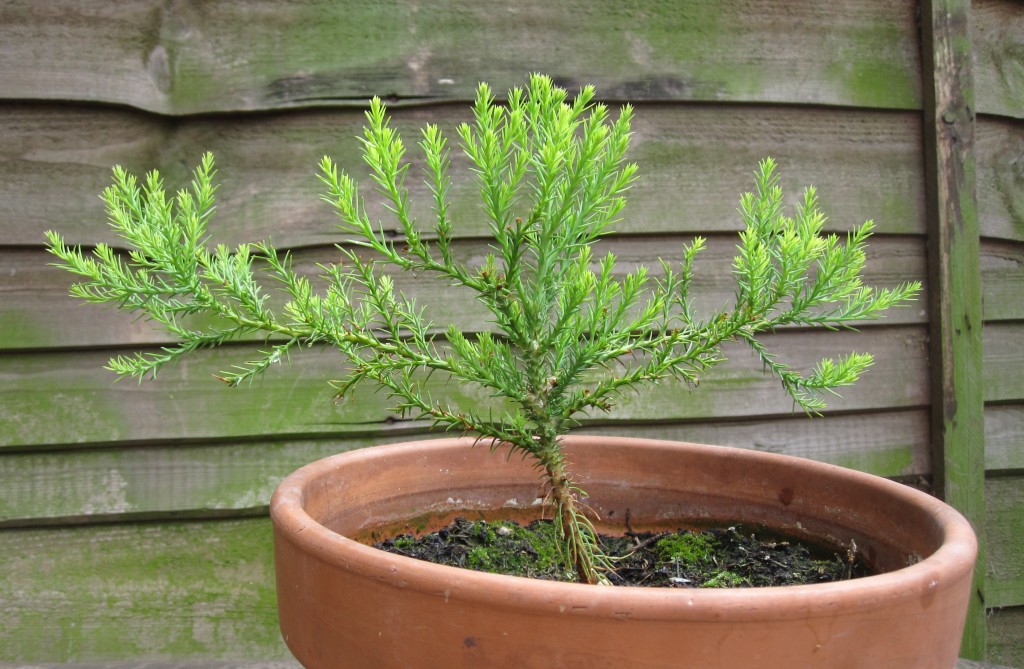
At the moment, this little redwood seedling is just 18 months old. Given 500 years or so, it’s going to get a wee bit bigger:

The seeds of redwoods are absolutely titchy, as you can’t see in the picture, below because the idiot who took the photo forgot to put a scale bar on it. Each seed has a mass of about 5 milligrams.
Enzymes provide alternative routes to product with a lower activation energy
An enzyme lowers the activation energy for a reaction
Like a previous post, the problem here is not so much that this idea is flat-out wrong, but that it’s very prone to misinterpretation.
Text-books often state that an enzyme, or any other catalyst, lowers the activation energy of a reaction.
The activation energy for a reaction (written ∆G‡ or Ea in most texts) is supposed to be a measure of how energetically two molecules need to collide with one another to react. If the the molecules collide too slowly, the collision won’t be energetic enough to break bonds, and the molecules will leave the collision unchanged. If they collide into one another fast enough, the collision will be energetic enough for a reaction to occur and for product to form.
The wisdom of crowds
I tried this about five years ago, with more or less the inverse of these results. The nerdy grammar fascist bit of me is pleasantly surprised by the improvement, but poor Karl Albert still has some way to go…
- [Fischer projection](https://www.google.co.uk/search?q=%22fischer+projection%22&nfpr=1 “Google for “Fischer projection””): About 38,800 results
- [Fisher projection](https://www.google.co.uk/search?q=%22fisher+projection%22&nfpr=1 “Google for “Fisher projection””): [sic] About 8,090 results
- [Lineweaver Burk](https://www.google.co.uk/search?q=%22Lineweaver+Burk%22&nfpr=1 “Google for “Lineweaver Burk””): About 234,000 results
- [Lineweaver Burke](https://www.google.co.uk/search?q=%22Lineweaver+Burke%22&nfpr=1 “Google for “Lineweaver Burke””): [sic] About 28,600 results
- [Henderson Hasselbalch](https://www.google.co.uk/search?q=%22Henderson+Hasselbalch%22&nfpr=1 “Google for “Henderson Hasselbalch””): About 168,000 results
- [Henderson Hasselbach](https://www.google.co.uk/search?q=%22Henderson+Hasselbach%22&nfpr=1 “Google for “Henderson Hasselbach””): [sic] About About 70,400 results
Organism of the week #15 – Try not to think about the poo
Apologies for the long gap between postings; it’s been exam season at work, and I’ve not had much time to blog.
The garden was buzzing with green-bottles yesterday, thanks to a combination of warm weather and overflowing brown bins. These flies tend to get a bit of a bad wrap, what with the spitting onto dog shit, sucking up the slurry, and then tramping it all over our food.
Organism of the week #14 - Turtles all the way down
Cassiopea, which looks rather like a spelling mistake (but isn’t), also looks a bit like an anemone (but isn’t):
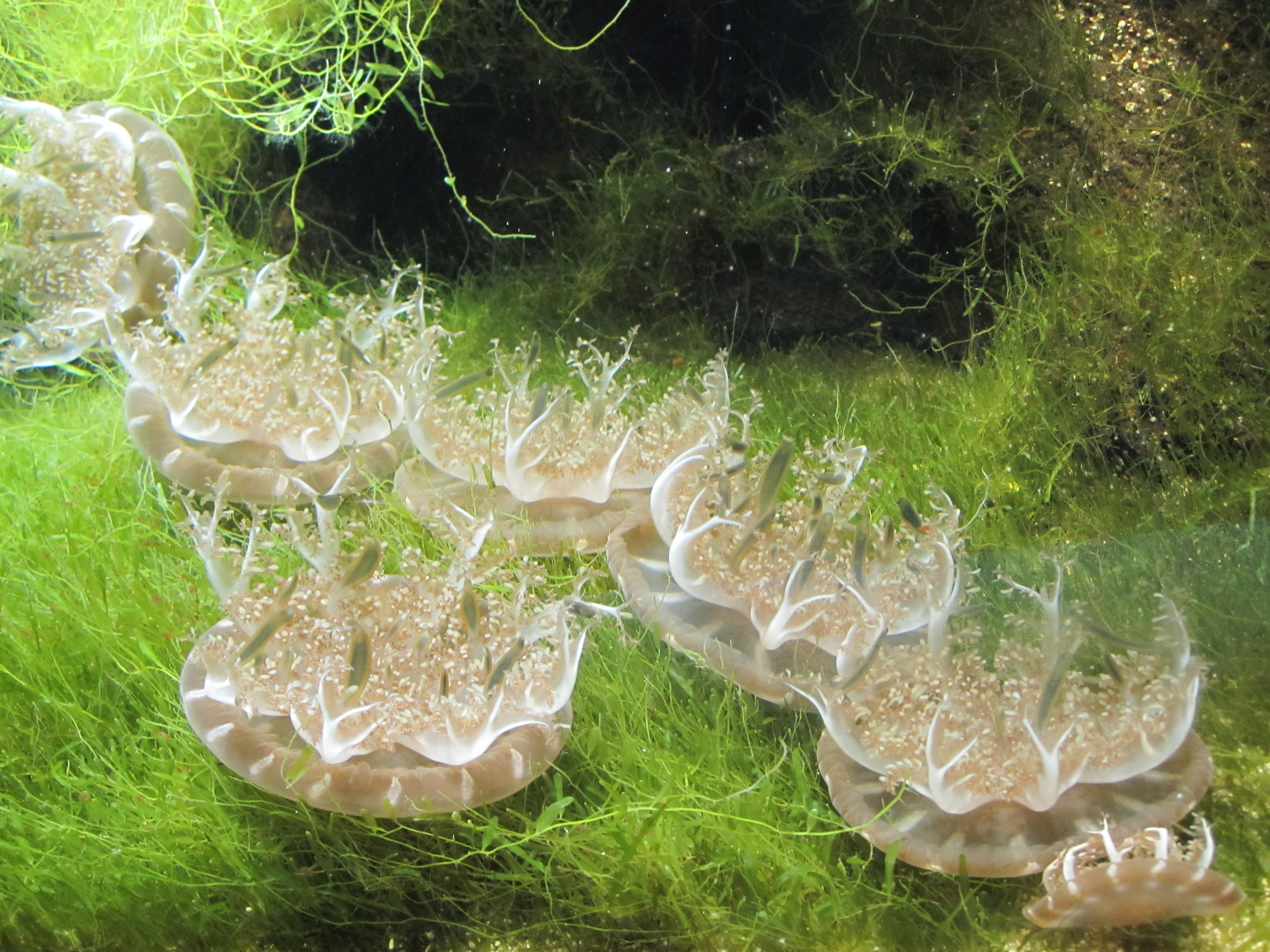
It’s actually a jellyfish, but one that spends most of its time living upside-down (relative to its relatives). Unlike its close relatives, it gets much of its energy from sunbathing rather than from fishing.
Organism of the week #13 - Unlucky for some
I’m a sucker for things that are both poisonous and pretty. Datura metel definitely meets both criteria.

These photos were taken in southern Spain, where this purple variety of the plant seemed to have naturalised itself out from someone’s garden .
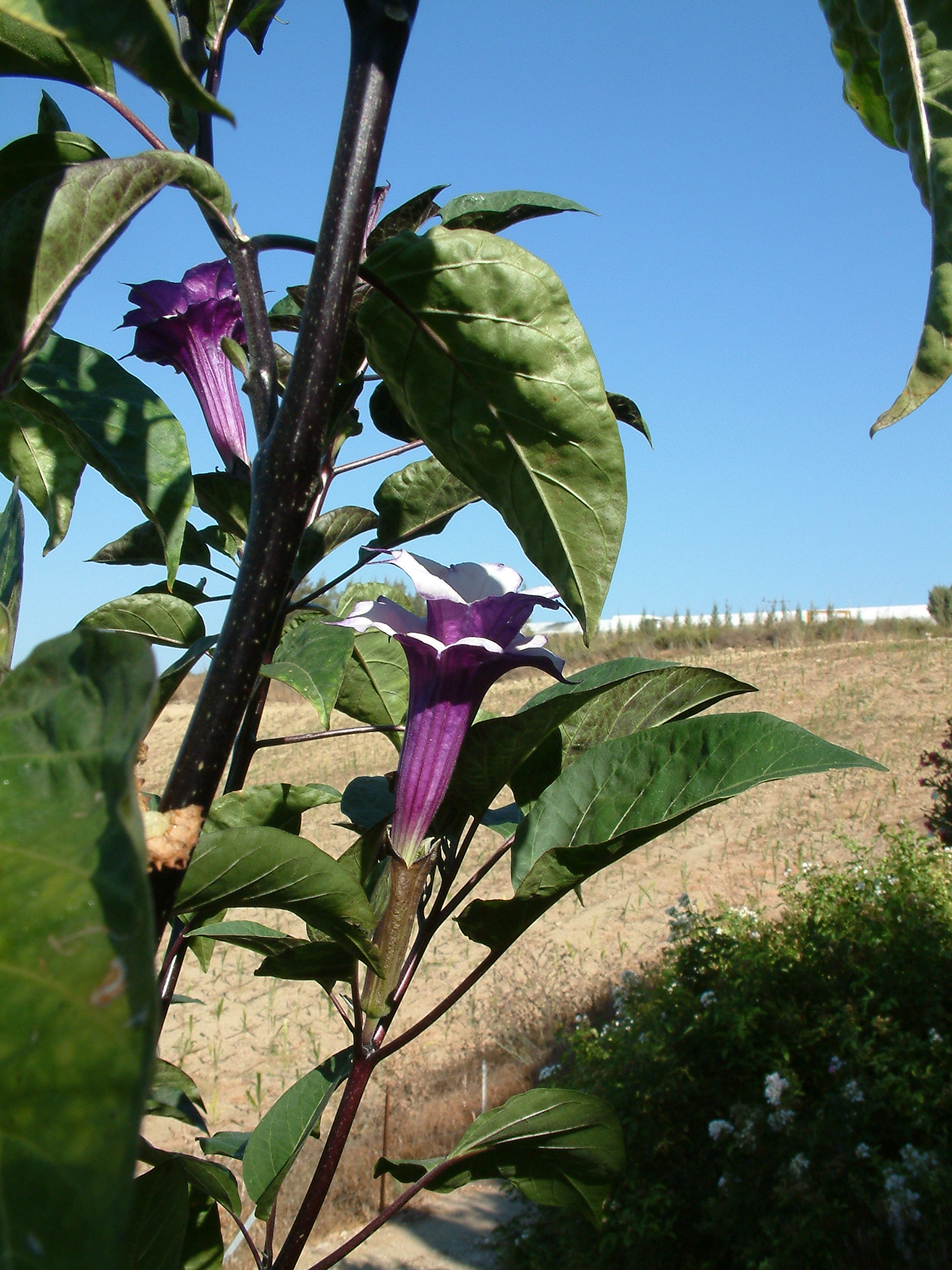
Datura metel is closely related to Atropa belladonna, the deadly nightshade, and - like it - the plant contains high concentrations of atropine and scopolamine. If eaten, these chemicals clog up receptors in the nervous system, the normal job of which is to cause the body to “rest and digest”. By blocking these receptors, high doses of atropine or scopolamine cause a “flight or fight” response: increased heart rate, dry mouth, reduced gut movement, and dilated pupils. The last of these effects is the source of the belladonna (‘beautiful lady’) of Atropa belladonna: juice from deadly nightshade was used cosmetically during the middle ages to dilate the pupils alluringly - and, one suspects - alarmingly.
The Michaelis-Menten model is not applicable to most enzymes in a cell
Enzymes in cells can be modelled using the Michaelis-Menten model
Enzymes can be, and often are, modelled by the Michaelis-Menten (well, Briggs-Haldane) model:
v = vmax · [S] / (KM + [S])
Where:
- v is the velocity of the enzyme, which is the rate at which product accumulates
- vmax is the maximum velocity of the enzyme (i.e. the velocity to which it tends as substrate concentration increases towards infinity)
- [S] is the concentration of substrate
- KM is the Michaelis constant for the enzyme, which is the concentration of substrate needed to make the enzyme run at half its maximum velocity
This model works out very well when you mix together an enzyme and its substrate in a test-tube and measure the initial rate of product accumulation. Here are some data from a practical I run with my first-year biology students, showing a nice hyperbolic curve as predicted by the model: