Adaptations evolve in populations
Organisms evolve adaptations to increase their fitness
There are few ideas in science that explain as much of the natural world as does natural selection, but there are few ideas in science that are more frequently misunderstood.
Often the misunderstandings are deliberate or disingenuous, but I’ve seen quotes like the one above even in undergraduate essays and popular science books.
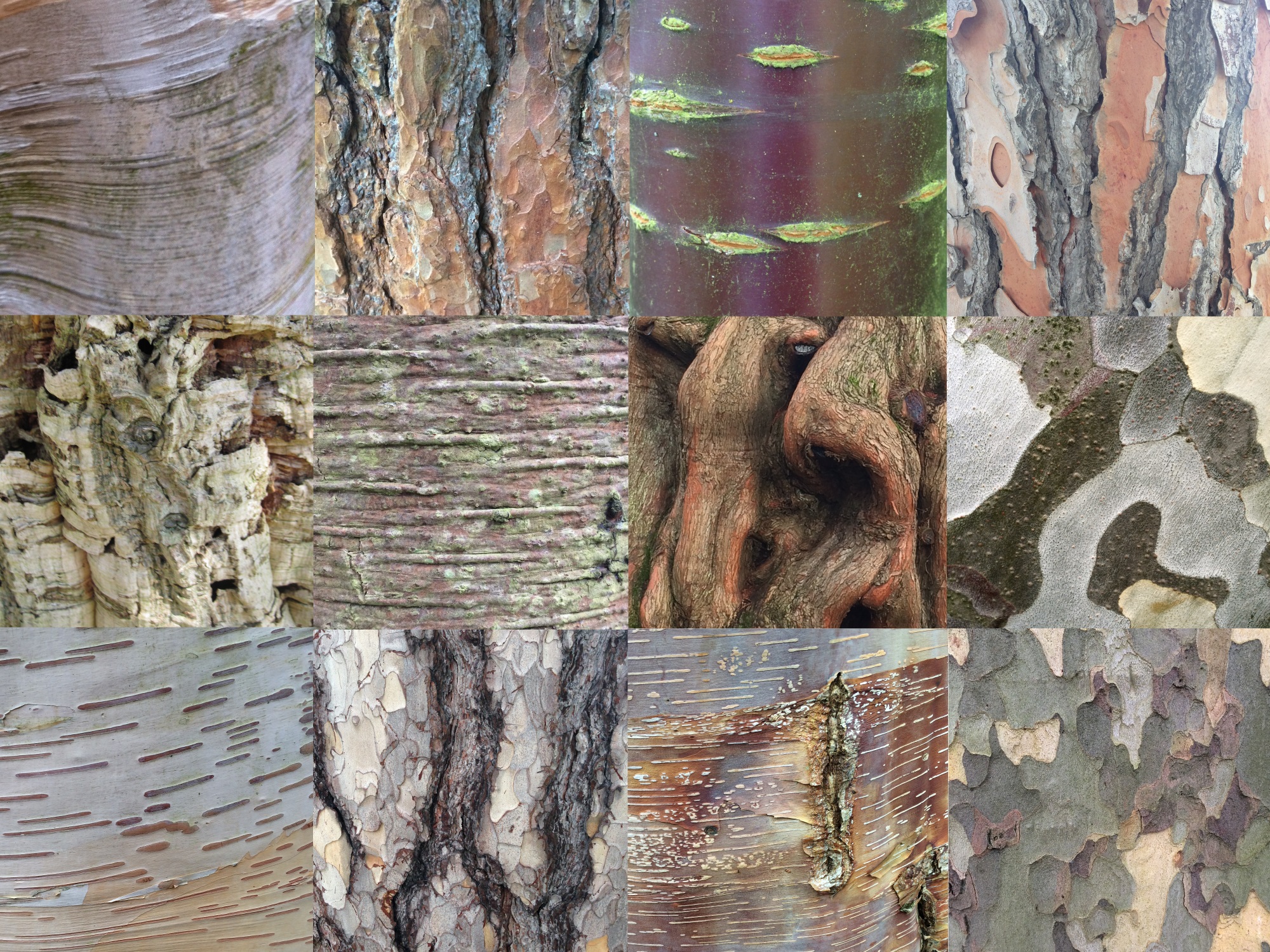
Bark
Wisley in Winter
It’s not really a botanic garden, but the Royal Horticultural Society’s gardens at Wisley is near enough as makes no difference. We visited in what should have been the dead of winter, but which in reality was this weird sprautumn mash-up that is now December in the UK. The heather garden was particularly pretty, despite the wind:

At £12, the entry price is a bit steep: even Kew does reduced rates when most of the plants are underground, sleeping off the summer’s excesses.
Imposter
Most years the pond-water microscopy practical throws up an exciting ciliate (or two, or three), but this year, the only ones we saw were duplicates, or too bloody fast to photograph. Ho hum.
So this year you’ll have to make do with an imposter. It’s still got cilia, but it is not a ciliate, and although it’s no bigger than a single-celled organism, it is in fact a full-blown multicellular animal:
Bagging botanical Brussels
The last time we went to Brussels, I got terribly excited that the hotel we were staying in was right next door to the Botanical Garden of Brussels. Unfortunately - as we discovered in short order - at some point in the 1930s the plants had mostly been shipped off elsewhere, leaving the garden not very botanical, and Dr Cook not very impressed.
Organism of the week #29 – Galling
Today is the first day of the new (academic) year at $WORK, but - aside from a couple of intro lectures - this is the calm before the real storm, which arrives in the form of a deluge of biological chemistry in November. If you’re lucky, you’ll get a few mugshots of some weird ciliate or other around then, otherwise, expect tumbleweed until the new (calendar) year…
Organism of the week #28 - Fractal art
Flowers are essentially tarts. Prostitutes for the bees. (Uncle Monty, Withnail and I)
Our tiny garden has only passing acquaintance with sunshine, so about the only plants that really thrive in its dingy clutches are shade-loving ferns. This Japanese painted fern is my current favourite: who needs flowers anyway, when leaves look like this?
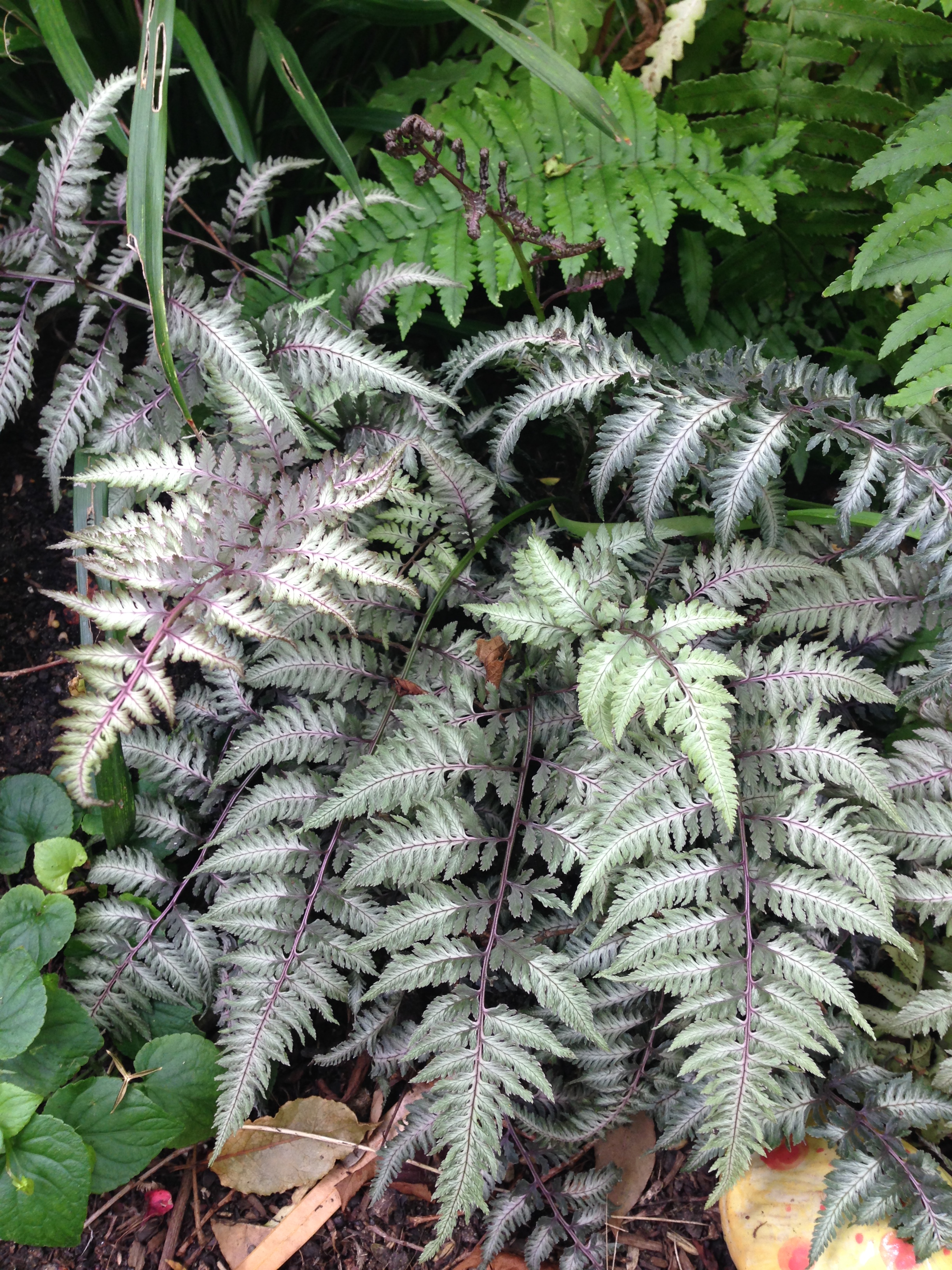
The colour is spectacular, but I also love the shape of the leaves. I have a rabbit’s-foot fern on my windowsill at $WORK, which branches not once, not twice, not thrice, but fwice, with each leaflet at each level looking very much like a miniaturised version of the whole leaf:
Living dangerously
Towards the end of the last millennium, I spent a lot of time befriending arsenic. The last two years of my PhD involved measuring how much iodine had fallen off a chemical used as a wood preservative day-in, day-out, and arsenic trioxide was the most exciting component of an otherwise excruciatingly dull test for iodide ions.
My little bottles of arsenic warned me to beware of pirates…
Organism of the week #27 - Alien haemorrhoids
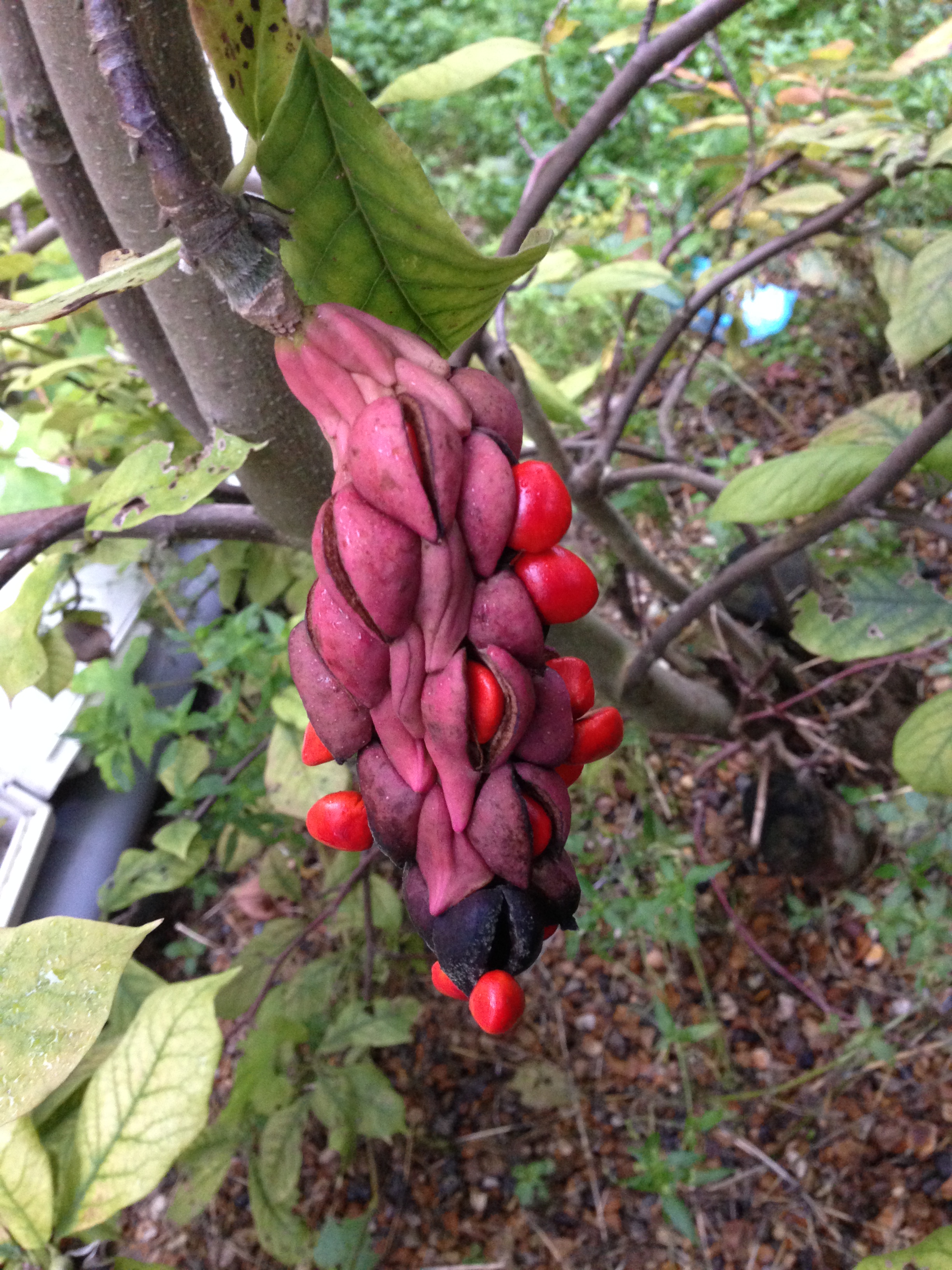
A quickie this week: magnolia fruit look like something from another planet.