Domestic science
Humans share their homes with a surprising number of other species, even discounting the ones they deliberately import to serve as allergen distribution machines. Autumn is a particularly good time to go spotting the spiders that cohabit with us, as many of them are grown fat and sleek on the flies of summer, and are therefore easy to spot.
The cellar spider (Pholcus phalangioides) is sometimes called the daddy long-legs, but unhelpfully, this refers to at least two other whole groups of animals, the harvestmen, and the crane-flies, neither of which are closely related. The confusion this causes is one reason why biologists insist on using Latin names instead.
Far from the light of day, and somewhere near Hampstead
Paddock is the codename of a bunker that was built in the late 1930s as a back-up for the better known Cabinet War Rooms located in Whitehall.

The bunker was abandoned at the end of the war, and was only used intermittently after that by the Post Office, whose Research Station sat atop it. In 1998, the surface site and the bunker were sold off, and a housing development was built on top. Unfortunately, during the development, the concrete slab that kept the bunker watertight was damaged, and since then, Paddock has been slowly decaying.
A brief history of rubbish
In 1972, the geneticist Susumu Ohno coined the term “junk DNA” to explain why the genomes of closely related organisms vary so much in size:
The mammalian genome […] contains roughly […] 3.0 × 10⁹ base pairs. This is at least 750 times the genome size of E. coli. If we take the simplistic assumption that the number of genes contained is proportional to to the genome size, we would have to conclude that 3 million genes or so are contained in our genome. The falseness of such an assumption becomes clear when we realize that the genome of the lowly lungfish and salamanders can be 36 times greater than our own.
Ohno, S. (1972) So much ‘junk’ DNA in our genome, In: Smith, H. H. (ed) Evolution of genetic systems, 23, 366-370.
Beautiful butterworts
A recent hike in Königssee to see Germany’s highest waterfall was a little underwhelming but the hydrological shortcomings were entirely forgotten when I spotted this beauty growing in a crevice above the lake:
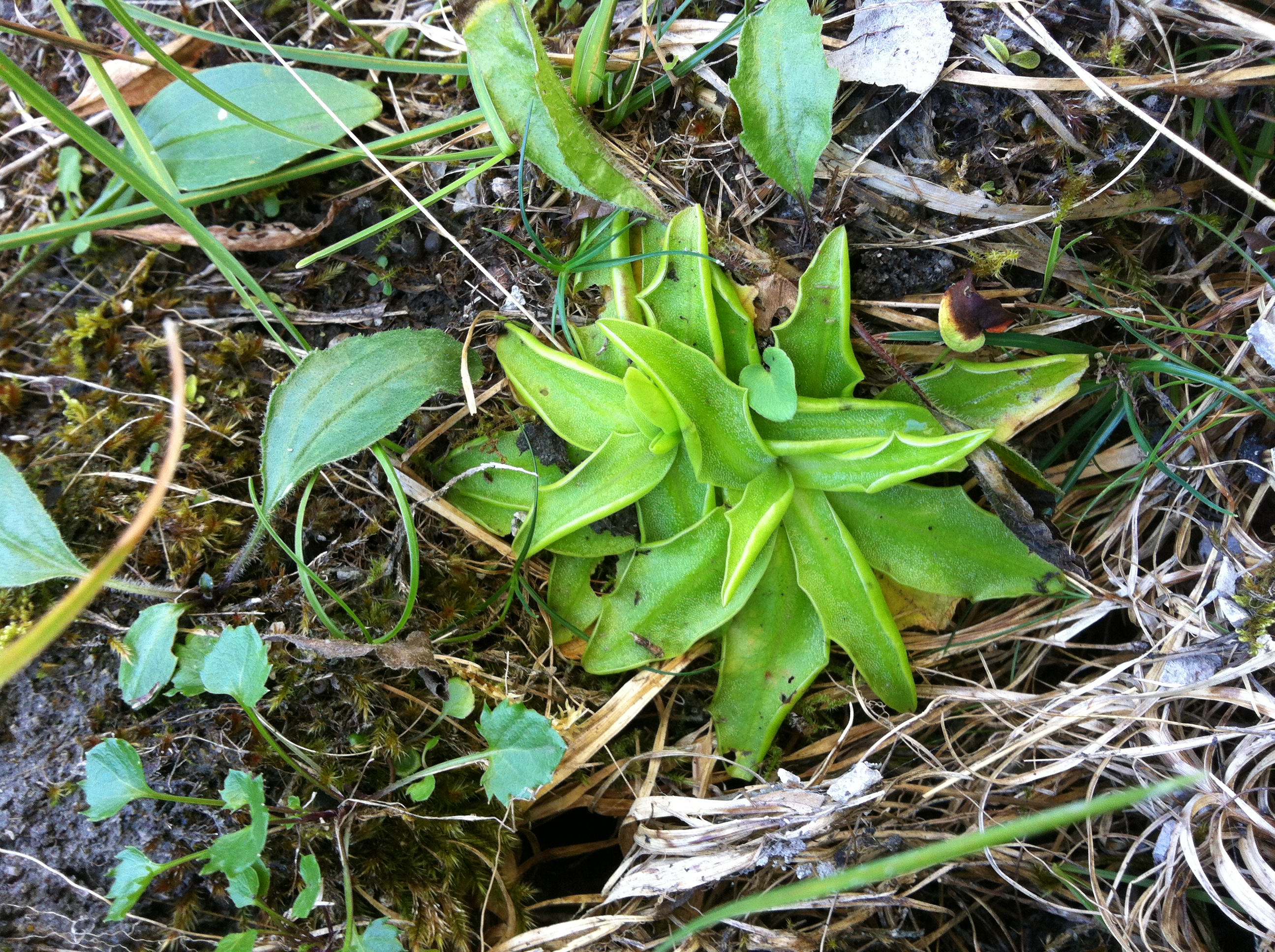
Butterworts are amongst my favourite carnivorous plants: their murderous ways are so delicately concealed. Who would suspect such a pretty bank of flowers to be a veritable morgue of fungus gnats?
Farewell Gore Vidal
There is no human problem which could not be solved if people would simply do as I advise
Being an avowed atheist, a form of words appropriate to death has always eluded me: “rest in peace” has always seemed inappropriate, implying - as it does - that something is left after death that could be at rest or otherwise. In similar vein, it has always struck me as terribly unfortunate that the one person who will never be aware of an obituary is the deceased; Alfred Nobel being a notable and salutary exception.
The magnolia misunderstanding
T. Ryan Gregory has a great post at Genomicron on the ‘Platypus Fallacy’. He imagines a platypus professor explaining the wonders of the Human Genome Project to a group of student platypodes:
“The lineage of which humans are a part is a very ancient offshoot of our mammalian family tree, so it was 166 million years ago that we last shared a common ancestor with humans, and that puts them somewhere between mammals and reptiles, because they lack a lot of specialized characters that we have gained but the ancestral amniote also lacked; for instance, they have no electroreception, no bills, no webbed feet, and no venom. So we can use them to trace the changes that have occurred as we went from being a reptile, to having fur to making milk to having our specialized features.”
Why living fossils need to die
I’m the proud owner of a Madagascan cycad. He or she (I won’t know until s/he gets older) gets an annual decking with baubles at Christmas, but spends most of the rest of the year getting in the way of the television.
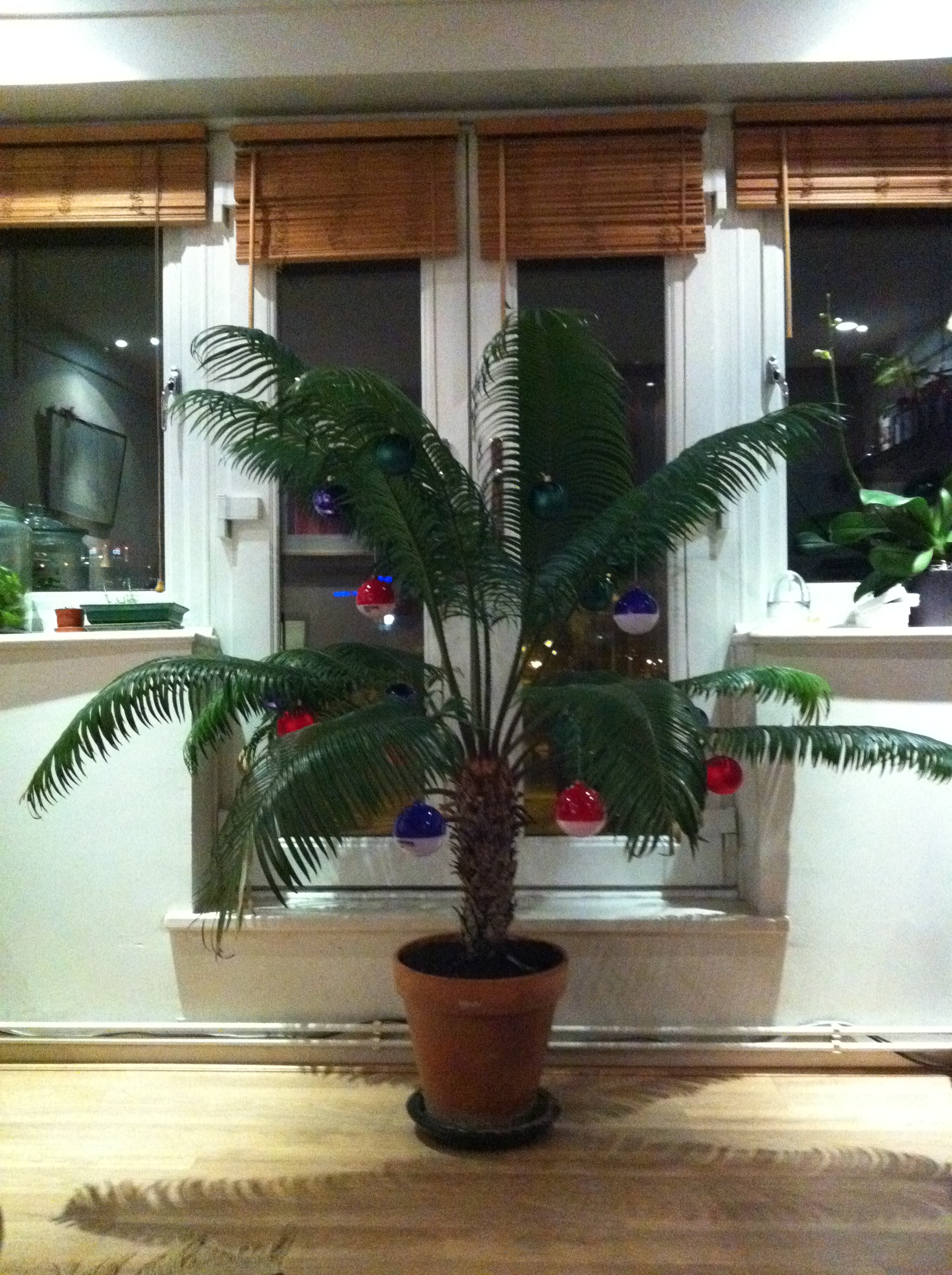
Cycads look a lot like palms, but rather than producing flowers and fruits, they make cones and bear fruitless naked seeds. This hints at their origins. They are much more closely related to pine trees and other gymnosperms, than to flowering plants like palms.
Community payback for undergrads
Two acquaintances of mine, both teachers of one kind or another, tell me that they no longer feel comfortable steering students away from Wikipedia, because they can no longer maintain the prim pretence that they themselves aren’t consulting it on a daily basis.
I’ve long appreciated Wikipedia for its convenience; and been amused by its unforgivable mis-prioritisation. On the other hand, I’ve been irritated by the scrappiness of articles on concepts I’ve taught and saddened by the thoughtless pasting of its content into some of the essays I mark.
Version 2
Several years ago, I pulled my old website, as it had become a compost-heap of reformatted lecture notes that I no longer had time to maintain, and which Wikipedia had rendered redundant in any case. The pleasures of writing HTML by hand had begun to pall, and the hand-rolled CGI guestbook made even a coding Luddite like me shudder with embarrassment.